
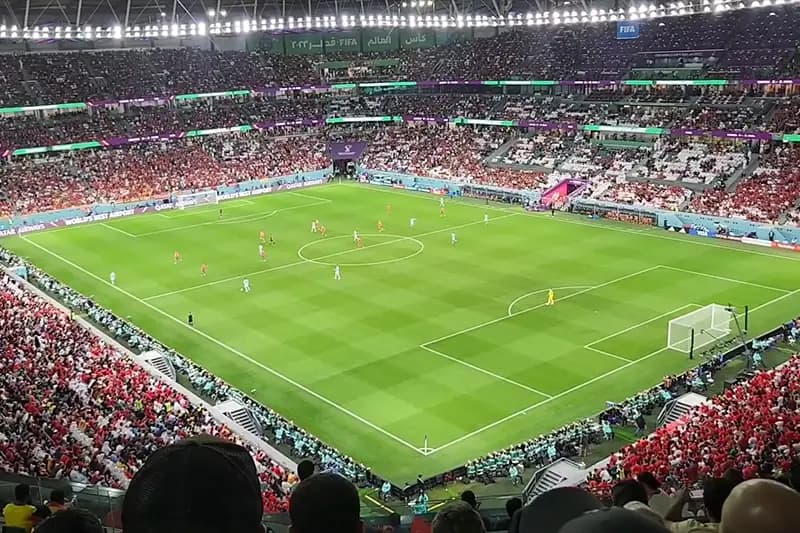

























Your Spain Tickets for the World Cup 2026
A group experience at VisitFootball
At VisitFootball, we understand better than anyone that a football trip is a group experience. That is why we ensure that none of our customers have to sit alone in the stadium. If you are travelling with an even number of people, you can be sure that you will be seated together.
For travel groups with an odd number of people, you will also be seated together in 95% of cases. However, for full certainty, we recommend contacting us so we can guarantee this. With our years of experience and excellent connections with clubs, we can arrange the best seats for you.
Why VisitFootball offers the best tickets
VisitFootball distinguishes itself from competitors through our direct connections with the biggest football clubs in Europe. We offer official tickets, ensuring the authenticity and quality of your seats.
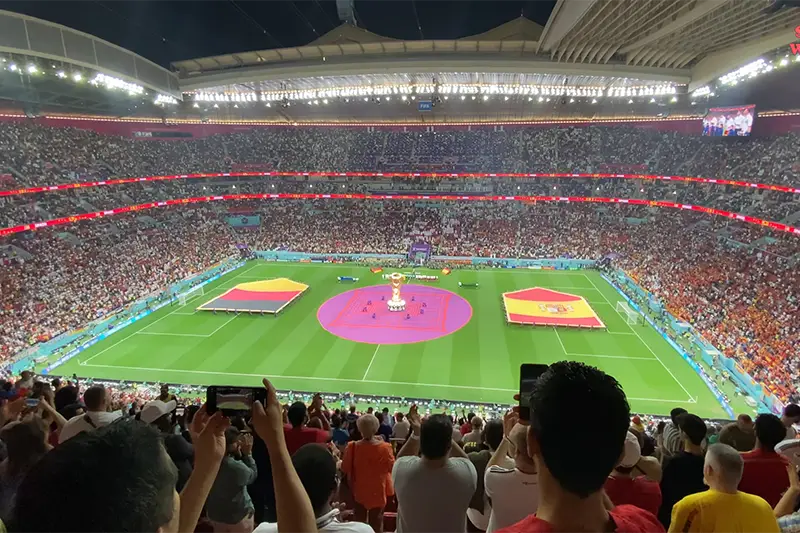
In addition, our team of football experts knows the stadiums inside out. They can advise you on the best seats based on your preferences and budget. Whether you want to sit close to the pitch or prefer a great overview of the stadium, we will find the perfect spot for you.
About your Spain Tickets World Cup 2026
Tickets via the FIFA World Cup app for convenience and safety
For the World Cup 2026, all tickets for matches of the Spanish national team are delivered via the official FIFA World Cup app. This means you will not receive physical tickets, but a digital version that you can easily present on your smartphone at the stadium entrance. Tickets via the FIFA app are a safe and environmentally friendly solution that significantly reduces the risk of loss or theft.

Fully organised Spain football trip
Easy booking in 3 steps
Choose your preferred Spain match on our website. We offer a complete trip including flight and accommodation, for which you can request a quote.
Check whether the quote meets your wishes and book your trip. We will take care of everything for you.
Complete your booking by filling in your details. After payment, we will immediately send your travel documents by email. Enjoy your trip! With these simple steps, you can quickly book a fully organised football trip.
Vibrant cities with cultural highlights
The host cities of the World Cup 2026 in the United States, Canada and Mexico offer not only top-level football, but also a wealth of cultural attractions and tourist highlights.
New York is a must-visit with iconic landmarks such as Times Square, Central Park, the Statue of Liberty and breathtaking views from the Empire State Building.
Los Angeles combines sun, beach and entertainment with highlights such as Hollywood, Santa Monica Pier and Venice Beach, while also offering a unique sports culture.
In Mexico City, you can explore a rich history with sights such as the historic centre, impressive Aztec temples and the world-famous Estadio Azteca, one of the most iconic stadiums in the world.
Toronto offers a mix of modern architecture and nature, with the CN Tower, vibrant neighbourhoods and beautiful views over Lake Ontario.
For the true football fan
The United States, Canada and Mexico together form a true football paradise during the World Cup 2026. For true fans, there is plenty to experience besides the matches:
- Visit stadiums in world cities such as New York, Los Angeles, Dallas and Mexico City and experience the unique atmosphere of these iconic venues.
- Take a stadium tour and discover the impressive sports culture and facilities of North America’s largest stadiums.
- Experience the atmosphere in sports bars and fan zones where supporters from all over the world come together.
- Combine your football trip with a visit to famous stadiums such as MetLife Stadium, SoFi Stadium or the legendary Estadio Azteca.
With this extensive football offering, a trip to the World Cup 2026 is an unforgettable experience for every football fan.
About the Spanish national team
Origins and early years
The Spanish national football team was founded in 1920 and played its first official international match in 1923 against Denmark. In the early years, Spain was not yet among the world’s top teams, but gradually built a strong reputation.
The golden years (2008–2012)
Spain’s greatest successes came between 2008 and 2012, also known as the “Golden Years.” Under coach Vicente del Bosque, Spain won the European Championship in 2008 by defeating Germany in the final. Two years later, they achieved their greatest triumph by winning the 2010 World Cup in South Africa, defeating the Netherlands 1-0 in the final with a goal from Andrés Iniesta.
In 2012, Spain defended their European title by beating Italy in the final. This period was defined by the famous “tiki-taka” style, with icons such as Xavi, Iniesta, Sergio Ramos and David Villa.
Recent years
After the Golden Years, Spain experienced less success in major tournaments, exiting early at the 2014 World Cup and Euro 2016. Recently, however, Spain has started to return to the top with young talents such as Gavi, Pedri and Ansu Fati. Under the guidance of Luis Enrique, Spain aims to compete again for major trophies.
Iconic players such as Iker Casillas, Xavi, Iniesta and David Villa have left a lasting mark on Spanish football history.
Key figures and icons
Some of the most iconic players in Spanish football history include:
- Iker Casillas: The former Real Madrid goalkeeper won two European Championships and a World Cup.
- Xavi Hernández and Andrés Iniesta: This midfield duo was the driving force behind Spain and FC Barcelona’s success.
- David Villa: Spain’s all-time top scorer who led the team to European and world titles.
Another iconic figure is coach Vicente del Bosque, who led Spain to the 2010 World Cup title.
The Spanish national team
The Spanish national team, nicknamed “La Furia Roja,” is one of the most successful national teams in the world. Their greatest achievements include the European titles in 2008 and 2012, and the World Cup victory in 2010 in South Africa.
Under coach Vicente del Bosque, Spain perfected the tiki-taka playing style, based on possession, short passing and positional play. Combined with top players like Xavi, Iniesta, Sergio Ramos and David Villa, this made Spain one of the most dominant teams in world football during that period.
Although Spain has been less successful in recent years, it remains a top football nation producing world-class talent. With players such as Sergio Busquets, Álvaro Morata and young stars like Gavi and Pedri, Spain aims to return to the top.